Annie’s Sandy Beaches Cold IPA
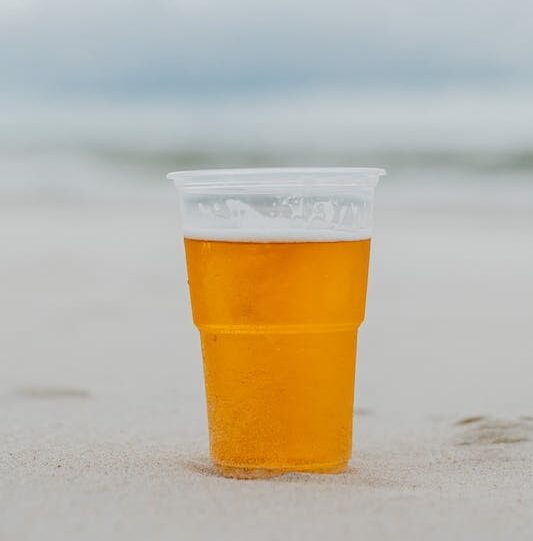
Recipe: Annie’s Sandy Beaches Cold IPA Despite it’s lean malt frame and body-lightening adjuncts, cold IPA is well within the reach of homebrewers who like to employ partial-mashes and extracts.
ANNIE JOHNSON Sep 26, 2023 – 3 min read
This cold IPA recipe relies on some lighter extracts, flaked rice, and a shot of hop extract to minimize the hop mass in the kettle. For much more about brewing this style with a partial mash, see Cold IPA, Extracted: It’s a Cold Snap.
EXTRACT
Batch size: 5 gallons (19 liters)
Brewhouse efficiency: 72%
OG: 1.062
FG: 1.009
IBUs: 51-ish
ABV: 6.9%
MALT/GRAIN BILL
6.4 lb (2.9 kg) pilsner liquid malt extract (LME)
2.2 lb (1.5 kg) clarified brown rice syrup
HOPS SCHEDULE
3 ml HopShot at 60 minutes [30 IBUs]
0.5 oz (14 g) Citra at 10 minutes [9 IBUs]
0.5 oz (14 g) Centennial at 10 minutes [7 IBUs]
0.5 oz (14 g) Citra at flameout/whirlpool [3 IBUs]
0.5 oz (14 g) Amarillo at flameout/whirlpool [2 IBUs]
2 oz (57 g) Nelson Sauvin at dry hop 1 oz (28 g) each Citra and Mosaic at dry hop
YEAST
Fermentis SafLager W-34/70 or similar
DIRECTIONS
Bring 5.25 gallons (20 liters) of water to a boil, then turn off the heat source. Add the LME and rice syrup, stirring often to dissolve and avoid scorching. Boil for 60 minutes, adding hop extract and hops according to the schedule. After the boil, add flameout hops and stir to create a vortex, allowing 5 minutes to steep. Chill to about 55°F (13°C), aerate, and pitch the yeast (2–3 packets of dried yeast or a healthy starter). Ferment at 55°F (13°C) the first day, then allow free rise to 65°F (18°C). When the gravity has dropped to about 1.013—about 7 days in—rack off the trub into a sanitized keg or other pressure-safe vessel, add dry hops, and attach a spunding valve or set the tank to pressurize to 14 psi. Remove dry hops after 4 days. When fermentation is complete and gravity has stabilized, crash to near-freezing and add gelatin finings, keeping the pressure at 14 psi. Once clear and carbonated, in 5–7 days, transfer to a serving keg or bottle, and enjoy!
BREWER’S NOTES
Cold side: If you don’t have a spunding valve, keg, or pressurized fermentor, you can use buckets or carboys. Just rack to secondary before dry-hopping. Clarity is a virtue here. Be careful to minimize any splashing to avoid oxygen pick-up, purging your vessel with CO2 if possible.